Cupcakes Are Not Culture
Culture doesn't come from performative gestures. It's built by how leaders operate every day. Employees know the difference.
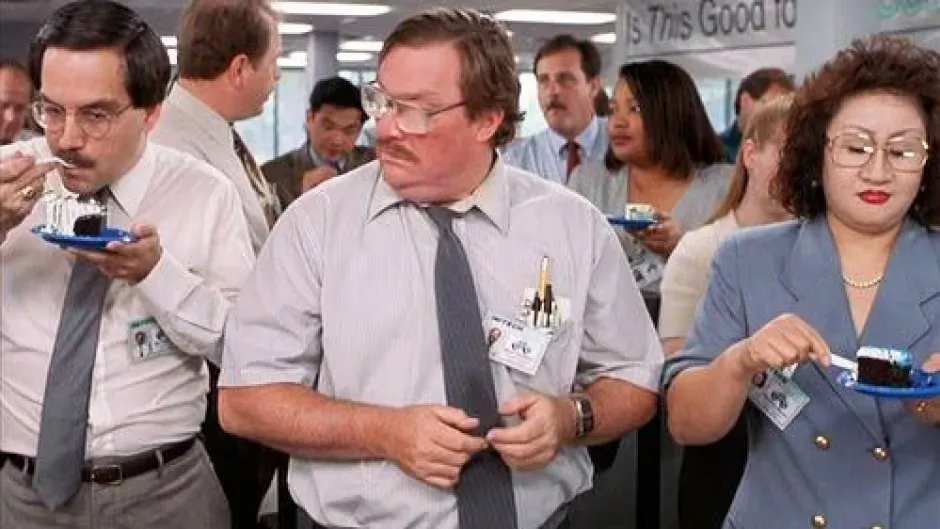
Few things have a greater impact on performance than company culture. And yet, too often companies resort to superficial (albeit fun and well-intended) activities like themed lunches as their sole efforts to build culture or express a commitment to diversity. This short, light-hearted look at the topic belies two important themes: culture has a huge impact on performance, and culture comes from the top. Both mean that it is essential for leaders to do more than fill their employees’ bellies with empty calories.
I love the film Office Space. As a Gen Xer who entered the workforce in the mid-90s, when business casual meant a collared shirt and a smart pair of chinos, Office Space captured the angst and despair of working life in two contexts: white-collar corporate jobs and restaurant work. Among the many standout moments are two scenes that satirically depict what passed for “culture” and “diversity” at the time. One is the cringe-worthy cake scene where a visibly downtrodden staff—including everyone’s favorite antihero, cake lover and red stapler connoisseur—groans its way through singing Happy Birthday for their preening, self-important boss, Lumbergh. The other is when Jennifer Aniston’s character quits her restaurant job after her manager shames her for having only the minimal number of pieces of “flair” in her uniform.
You’d have hoped that these superficial commitments to culture and diversity would be consigned to the history books by now. And yet, a few weeks ago, I saw the following post appear in my LinkedIn feed:
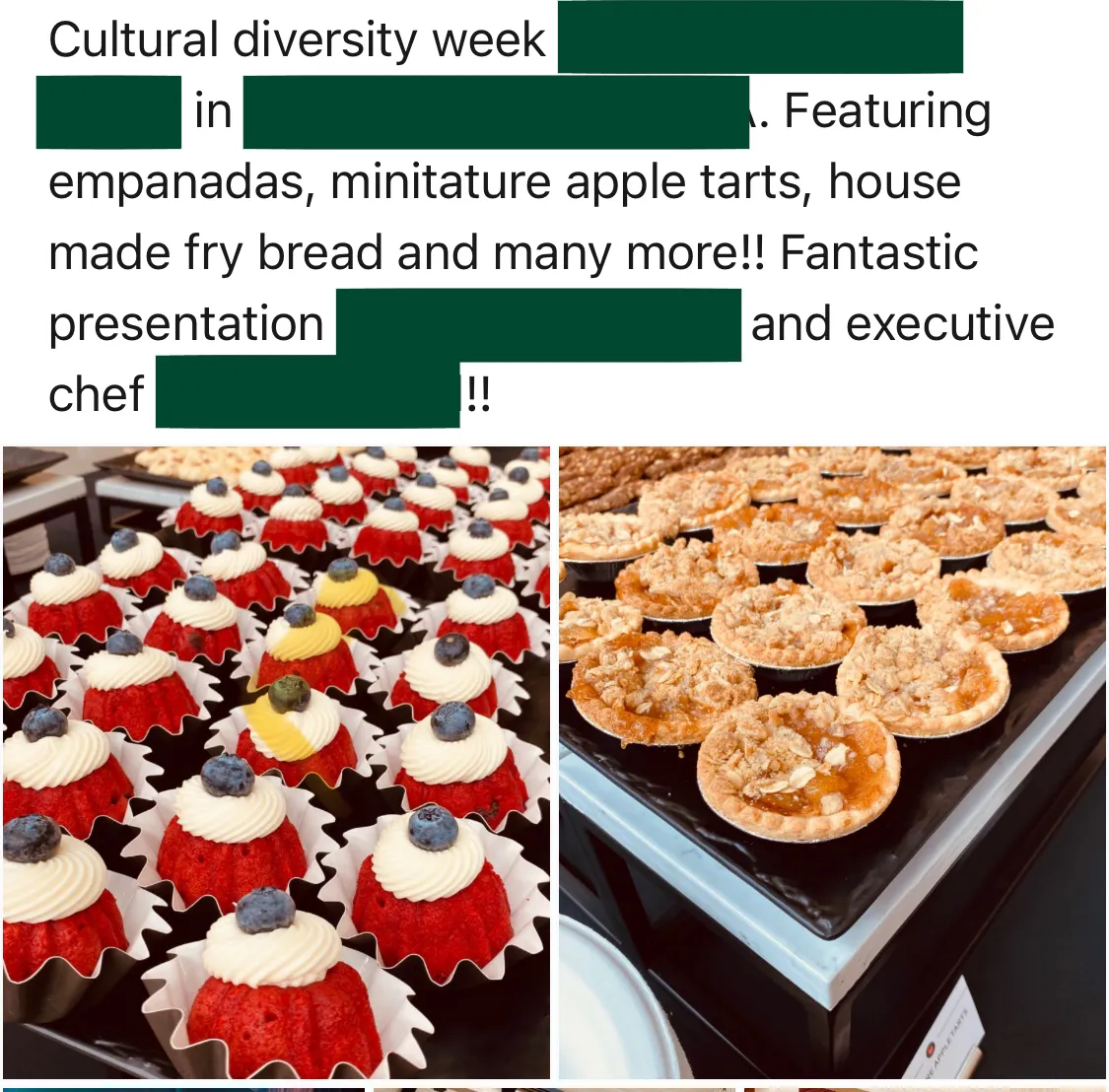
This person is lauding his company’s commitment to cultural diversity, on display during the inventively-named Cultural Diversity Week. The day’s activity was evidently food-related, “featuring empanadas, minitature [sic] apple tarts, house made fry bread and many more!!” Interestingly, this photo shows what, to my discerning eye at least, appear to be professionally made red-white-and-blue cupcakes. I don’t know what culture they represent, but who doesn’t love cupcakes.
Now, I am a massive fan of empanadas and apple tarts and cupcakes, whatever the color. I genuinely think it’s fantastic when people share their food-based traditions at work, and I willingly participate in such events. Sharing a meal is my favorite way of deepening connections with colleagues. There are few things more humanizing than breaking bread together. And, as the post implies, it appears that the food event is part of a broad suite of activities for the company’s Cultural Diversity Week.
But therein lies the problem.
Having a special day or week or month to celebrate culture—whether that is company culture or cultural diversity—may be the most common way that employers operationalize their commitment to both issues. Unfortunately, it may also be the only way they do so.
These types of events are the “I” in DEI (or EDI, if you’re from the UK). I is for Inclusion, meaning the acceptance and recognition that there are different types of people who, for various reasons, were not previously welcome in many professional settings because of their sex, race, origin, ability, life choices, and more. DEI initiatives exist to eliminate systemic barriers that prevent people from having equal opportunities. They remind us of the value and the essential humanity of others who, by birth or expression, are different from oneself.
Event-based inclusion is an easy and visible way for companies to show a commitment to different communities and causes. We are reminded of the “seasons of diversity” on LinkedIn: Black History Month, International Women’s Day, Pride Month, Mental Health Day, and others, where companies and employees post their stories to demonstrate their commitment and appeal to their employees and customers.
Let me be clear: inclusion, in principle and in practice, is essential for an engaged workforce. But what the company and its people do during the other 11 months, or 51 weeks, or 364 days of the year has a far greater impact on culture—and includes everything related to diversity, equity, and inclusion.
I’ll finish with one more anecdote. This one is from my own experience with a previous employer when we rolled out our new company values. The main attraction of this event—as if the roll-out of our corporate values wasn’t enough of a draw—was cupcakes. There were cupcakes in each office. And that’s the last time I remember people speaking formally about our values for months.
Cupcakes do a lot of heavy lifting when it comes to corporate expressions of culture and diversity. But when the sugar hit wears off and people realize they were just empty calories, they want something more substantial.
Culture comes from the top
This tongue-in-cheek commentary on what was surely an enjoyable lunch experience belies the importance of two topics that have a huge impact on execution: culture and DEI.
Both are poorly understood. Few people appreciate the way culture is formed and how it then operates and permeates an organization. Equally, few people understand what it really means to create meaningful equity, diversity, and inclusion in a business—for if they did, they would promote such programs. Because of this, initiatives that aim to influence them are often superficial and ultimately ineffectual in driving lasting improvement. And both are regularly mocked and weaponized, making it difficult at times to even discuss these topics, much less develop effective programs. Success requires focus, intentionality, and hard work, even for conscientious organizations.
Leaders need to understand how these factors shape their businesses and what they can do to steer initiatives that are achievable, meaningful, understood, and appreciated. Because there is an unassailable truth about workplace culture: it comes from the top.
Culture is, unequivocally, a reflection of how the most senior person in the organization operates—the words they use, how they make decisions, whether they take vacations, what skills and behaviors they value. Absent any effort to change it, culture will persist and permeate the organization in the same way that water flows through any crack or crevice and finds its way to the lowest point. When people complain about company culture, they are correctly—albeit not always constructively—challenging the leadership to do better.
And yet, this doesn’t mean leaders can simply decide to change their culture and make it so. Culture isn’t an input you can set. It’s an output—the emergent result of how a company actually operates. It reflects the decisions leaders make, the behaviors they reward, the processes they build, and the conversations they have. Over time, culture becomes self-reinforcing: it shapes how the company executes, and execution in turn either enriches the culture or degrades it.
This is why cupcakes alone don’t work. When a company’s culture actually aligns with its stated values, cupcakes are celebratory—a moment to mark something real. But when the culture doesn’t align, cupcakes become performative. They signal intent without requiring change. Real culture change happens when leaders change how they operate—not for a week, but consistently, in ways that compound over time. The only way to build the culture you want is to execute in a way that reflects it, every day, until the culture you’ve built starts reinforcing itself.
Then you can celebrate with more than just cupcakes.